Because every now and then -- as here, in 'Mrs Porter and the Rock' from his new book Every Move You Make -- you come across something like this:
'She had never fathomed what men were really up to, what they wanted. What it was they were asking for, but never openly, and when they didn't get it, brooded and fretted over and clenched their jaws and inwardly went dark ...'
Indeed.
Friday, October 06, 2006


Wednesday, September 20, 2006
The Broken Shore, encore une fois
Peter Temple's The Broken Shore was published last year to rave reviews, including mine for the SMH, and it's just won the Colin Roderick Award for 2005. This award is given by the Foundation for Australian Literary Studies at James Cook University for the best Australian book, in any genre, published in the previous calendar year: The Broken Shore won out over, among other shortlisted things, Kate Grenville's The Secret River and Tim Flannery's The Weather Makers.
As I can no longer find my review online, I reproduce it here in an attempt to lure anyone who hasn't read this book yet to do so at the first opportunity.
Synchronistically, if that is a word, this news comes within days of my stumbling over another rave review of Temple, this time of Identity Theory which I haven't read, at the blog Head Butler, where Jesse Kornbluth says this. But in the meantime, here's mine from last year:
The Broken Shore
By Peter Temple
Text Publishing, 320pp, $29.95
Detective Senior Sergeant Joe Cashin, badly damaged in the line of duty, has been seconded to a job in the relative quiet of his childhood home town on the southern coast of Victoria. When he isn’t walking his two black standard poodles through the countryside or trying to find a comfortable position for his damaged body in a chair or on the floor while he listens to opera, Cashin spends his non-work time planning the rebuilding of the ancestral ruin in which he lives.
But then a highly respected and well-heeled local is found dead in his own home, and the body shows the marks of torture. The evidence points to three Aboriginal boys from the local community, but it soon starts to look as if there might be quite a different story behind this murder.
It’s hard to know where to start praising this book. Plot, style, setting and characters are all startlingly good, and even lovers of crime fiction will recognise that Temple has taken his writing beyond the usual boundaries of that admirable genre, though it still follows the mainstream conventions. There’s the idiosyncratic detective, a troubled loner with signature tastes in music, alcohol and/or books. There’s the tight plot full of red herrings and false trails, and the deft interweaving of a romance sub-plot involving a suitably foxy heroine. And there are some very, very horrible moments as the action unfolds.
Temple’s greatest gift is for the creation of his characters: their back-stories are sketched in with great economy and clarity, their general cast of mind is conveyed through small details, and their motivations are revealed detail by small detail. But most of all, Temple has an astonishing skill in conveying the feeling between his characters: the slow accretions of trust, the red haze of hatred, the fine strands of hostility in the weave of desire. When this book is made into a movie – and it will be – the real test for the actors will be in the two-handed scenes where they have to play off each other, because the emotional currents running between the various characters are so deep and strong as to be almost visible.
Temple has an acute ear for the speech patterns of a certain kind of Australian man. Although the story is not actually told in the first person, we see events from Cashin’s point of view so the style tends to be that of the character’s own very Australian inner voice, laconic to the point of occasional incomprehensibility, its humour deadpan and drier than a chip. When Cashin and his colleague Dove notice a bit of casual private-schoolboy bullying as they pass in the street – itself a briefly eloquent counterpoint to the wasted lives of the Aboriginal boys – Dove says ‘Year ten mugging class. Been out on a prac.’
There’s also plenty of action, much of it gruesome, some of it comic. There are remarkable evocations of landscape and cityscape, in which recognisable parts of Australia melt imperceptibly into fictional ones: Temple’s Melbourne is half invented, half real, as though you could turn down an alley off Lygon Street and suddenly find yourself in one of his plots. There are also some spectacular set pieces; the scene in the abandoned theatre is brilliant and chilling, a passage of suspense and horror that’s played out in silence and leaves much of the worst to the reader’s imagination.
The subject matter combines two of the most dark and dangerous undercurrents in contemporary Australian society: the status and treatment of the Aboriginal population, and the emergence of long-buried stories of institutional sexual abuse. Temple writes about these things with enough insight and passion to make the reader ask exactly where the boundary lies between genre fiction and ‘serious’ literary fiction. The Broken Shore is one of those watershed books that make you re-think your ideas about reading.
As I can no longer find my review online, I reproduce it here in an attempt to lure anyone who hasn't read this book yet to do so at the first opportunity.
Synchronistically, if that is a word, this news comes within days of my stumbling over another rave review of Temple, this time of Identity Theory which I haven't read, at the blog Head Butler, where Jesse Kornbluth says this. But in the meantime, here's mine from last year:
The Broken Shore
By Peter Temple
Text Publishing, 320pp, $29.95
Detective Senior Sergeant Joe Cashin, badly damaged in the line of duty, has been seconded to a job in the relative quiet of his childhood home town on the southern coast of Victoria. When he isn’t walking his two black standard poodles through the countryside or trying to find a comfortable position for his damaged body in a chair or on the floor while he listens to opera, Cashin spends his non-work time planning the rebuilding of the ancestral ruin in which he lives.
But then a highly respected and well-heeled local is found dead in his own home, and the body shows the marks of torture. The evidence points to three Aboriginal boys from the local community, but it soon starts to look as if there might be quite a different story behind this murder.
It’s hard to know where to start praising this book. Plot, style, setting and characters are all startlingly good, and even lovers of crime fiction will recognise that Temple has taken his writing beyond the usual boundaries of that admirable genre, though it still follows the mainstream conventions. There’s the idiosyncratic detective, a troubled loner with signature tastes in music, alcohol and/or books. There’s the tight plot full of red herrings and false trails, and the deft interweaving of a romance sub-plot involving a suitably foxy heroine. And there are some very, very horrible moments as the action unfolds.
Temple’s greatest gift is for the creation of his characters: their back-stories are sketched in with great economy and clarity, their general cast of mind is conveyed through small details, and their motivations are revealed detail by small detail. But most of all, Temple has an astonishing skill in conveying the feeling between his characters: the slow accretions of trust, the red haze of hatred, the fine strands of hostility in the weave of desire. When this book is made into a movie – and it will be – the real test for the actors will be in the two-handed scenes where they have to play off each other, because the emotional currents running between the various characters are so deep and strong as to be almost visible.
Temple has an acute ear for the speech patterns of a certain kind of Australian man. Although the story is not actually told in the first person, we see events from Cashin’s point of view so the style tends to be that of the character’s own very Australian inner voice, laconic to the point of occasional incomprehensibility, its humour deadpan and drier than a chip. When Cashin and his colleague Dove notice a bit of casual private-schoolboy bullying as they pass in the street – itself a briefly eloquent counterpoint to the wasted lives of the Aboriginal boys – Dove says ‘Year ten mugging class. Been out on a prac.’
There’s also plenty of action, much of it gruesome, some of it comic. There are remarkable evocations of landscape and cityscape, in which recognisable parts of Australia melt imperceptibly into fictional ones: Temple’s Melbourne is half invented, half real, as though you could turn down an alley off Lygon Street and suddenly find yourself in one of his plots. There are also some spectacular set pieces; the scene in the abandoned theatre is brilliant and chilling, a passage of suspense and horror that’s played out in silence and leaves much of the worst to the reader’s imagination.
The subject matter combines two of the most dark and dangerous undercurrents in contemporary Australian society: the status and treatment of the Aboriginal population, and the emergence of long-buried stories of institutional sexual abuse. Temple writes about these things with enough insight and passion to make the reader ask exactly where the boundary lies between genre fiction and ‘serious’ literary fiction. The Broken Shore is one of those watershed books that make you re-think your ideas about reading.
Friday, September 15, 2006
Anybody here under 30 and doing postgrad work in Aust Hist or Lit?
If you are, you might be interested in this email I've just had from Peter Kirkpatrick, president of ASAL:
Dear members and friends of ASAL,
Norman McCann Summer Scholarships in Australian History and Literature: National Library of Australia
Applications close: 30 September 2006
Gianoula Burns Tel: (02) 6262 1232 or gburns@nla.gov.au
Scholars are invited to undertake six weeks of research, from 2 January
2007, using the National Library's Australian history and literature
collections.
Generously supported by the McCann family in memory of former National
Library Council member Norman McCann, the scholarship is open to Australian
tertiary students under the age of 30 who have completed their first degree,
and have commenced or are interested in postgraduate studies.
Successful applicants will come from the disciplines of Australian history,
literature, librarianship, archives administration or museum studies.
Information and application forms here.
Dear members and friends of ASAL,
Norman McCann Summer Scholarships in Australian History and Literature: National Library of Australia
Applications close: 30 September 2006
Gianoula Burns Tel: (02) 6262 1232 or gburns@nla.gov.au
Scholars are invited to undertake six weeks of research, from 2 January
2007, using the National Library's Australian history and literature
collections.
Generously supported by the McCann family in memory of former National
Library Council member Norman McCann, the scholarship is open to Australian
tertiary students under the age of 30 who have completed their first degree,
and have commenced or are interested in postgraduate studies.
Successful applicants will come from the disciplines of Australian history,
literature, librarianship, archives administration or museum studies.
Information and application forms here.
Tuesday, September 05, 2006
Second First Tuesday Book Club
Two programs in, and so far this lively bit of Tuesday night teeve on Our ABC is still working. I'm trying to work out what it has that makes it different from earlier TV arts chat shows which have nearly all been excruciating to some degree or another. Here are the three things I've come up with so far: no gimmicks, ruthless editing, and Jennifer Byrne.
Byrne was great tonight. She was funny, she was smart, she kept everybody more or less on track without being in the least a bossy cow (this is no mean feat; I could never manage it in tutorials), and she is an extremely experienced TV person who knows what works and why. Being married to Andrew Denton must help a lot, I should think, but Byrne goes further back with TV even than she does with Denton and I am sure they bounce ideas off each other about how best to use the medium. Having said all that, my favourite moment tonight was when she lost patience with all the others, who were humming and hawing about Dava Sobel's Longitude not being enough of a rattling good yarn, and said 'Well, I think you're all fools!'
The editing was obtrusive in that the jerkiness of the conversation was quite obvious and the continuity was pretty nonexistent; the discontinuity, if you will. But at least it got rid of (this much was clear) a lot of waffle and left only the most lively bits of the conversation safe from the cutting-room floor.
The two surviving panelists from last month's four were Jason Steger and Marieke Hardy, aka Ms Fits; Peter Cundall and Jacki Weaver had been replaced by Pru Goward and John Safran. I wonder what the rationale is; is it two out and two new ones in per show? Did Cundall and Weaver (by far the best last month, I thought) only ever sign up for one show? Surely they can't have been got rid of after the fact; they were both great.
Tonight Jason Steger loked far more relaxed and comfortable (as it were) in front of the camera, and what he has to say is always interesting and articulate. Hardy was good, and looked gorgeous (this is important; it's television, after all). I thought she was being a bit wilfully dopey about Longitude, but what she had to say about The Shadow of the Wind was great. Pru Goward was all right but managed to get in an obligatory, and really silly, disparaging remark about 'left-wingers', apropos the admittedly shocking revelation that Gunter Grass was in his youth a member of the Waffen-SS. And John Safran ...
Yes. Well.
It'll be interesting to see who they get for the first Tuesday in October. It would be really good to see someone up there who can match Byrne for intelligence, intellectual sophistication, performance chops and passion, because nobody has come close so far. Louise Adler? Robyn Archer? David Marr?
Byrne was great tonight. She was funny, she was smart, she kept everybody more or less on track without being in the least a bossy cow (this is no mean feat; I could never manage it in tutorials), and she is an extremely experienced TV person who knows what works and why. Being married to Andrew Denton must help a lot, I should think, but Byrne goes further back with TV even than she does with Denton and I am sure they bounce ideas off each other about how best to use the medium. Having said all that, my favourite moment tonight was when she lost patience with all the others, who were humming and hawing about Dava Sobel's Longitude not being enough of a rattling good yarn, and said 'Well, I think you're all fools!'
The editing was obtrusive in that the jerkiness of the conversation was quite obvious and the continuity was pretty nonexistent; the discontinuity, if you will. But at least it got rid of (this much was clear) a lot of waffle and left only the most lively bits of the conversation safe from the cutting-room floor.
The two surviving panelists from last month's four were Jason Steger and Marieke Hardy, aka Ms Fits; Peter Cundall and Jacki Weaver had been replaced by Pru Goward and John Safran. I wonder what the rationale is; is it two out and two new ones in per show? Did Cundall and Weaver (by far the best last month, I thought) only ever sign up for one show? Surely they can't have been got rid of after the fact; they were both great.
Tonight Jason Steger loked far more relaxed and comfortable (as it were) in front of the camera, and what he has to say is always interesting and articulate. Hardy was good, and looked gorgeous (this is important; it's television, after all). I thought she was being a bit wilfully dopey about Longitude, but what she had to say about The Shadow of the Wind was great. Pru Goward was all right but managed to get in an obligatory, and really silly, disparaging remark about 'left-wingers', apropos the admittedly shocking revelation that Gunter Grass was in his youth a member of the Waffen-SS. And John Safran ...
Yes. Well.
It'll be interesting to see who they get for the first Tuesday in October. It would be really good to see someone up there who can match Byrne for intelligence, intellectual sophistication, performance chops and passion, because nobody has come close so far. Louise Adler? Robyn Archer? David Marr?
Wednesday, August 30, 2006
Get your head around this if you can
A quick email check has just turned up a press release from the Australian Society of Authors:
“SEDITIOUS” POETS BANNED!
The Australian Society of Authors (ASA), the principal advocate for the professional and artistic interests of Australian authors, has condemned the recent decision of the Wollongong Mall management to ban readings in the Mall by poets from the South Coast Writers’ Centre during National Poetry Week.
According to Mall management, poetry reading cannot have any political or religious content. Without such a guarantee, management refused to allow the proposed readings to go ahead. This is despite the fact that the Mall management allows Christmas carols to be performed, as well as the occasional political protest. The “seditious intent” of poetry though seems too much for Wollongong Mall.
ASA Executive Director Dr Jeremy Fisher said: “These sorts of decisions highlight the problems caused by the sedition provisions of the Government’s anti-terrorist laws. Administrators of public property feel it is safer to totally prohibit public performance rather than risk anti-government comments being made. This of course is exactly what sedition laws are designed to do — stifle public debate.”
Significantly, Mall policy on this issue was amended and ratified in November 2005, at the same time the anti-terrorist measures were being pushed through Federal Parliament.
The South Coast writers have not been deterred by the Mall management’s actions, however. A protest reading, featuring political and religious poems, is planned to be held in Wollongong on 6 September. The ASA urges all authors to support the right of South Coast poets to read their works untrammelled in public.
----
CONTACT
Dr Jeremy Fisher
Executive Director
Australian Society of Authors www.asauthors.org
PO Box 1566 Strawberry Hills NSW 2016
+61 (0)2 9318 0877 Fax: +61 (0)2 9318 0530
0438 318 673
----
So richly ripe is this ruling for mockery that I scarcely know where to start, but perhaps I had better not start at all; poking fun at it on a blog is probably seditious as well.
This kind of bureaucratic interference is on a par with the role of the hapless Detective Vogelsang in the unfolding of the Ern Malley affair, and suggests the same degree of incomprehension. You have to wonder what on earth they think they mean by 'politics' and 'religion'. What poem -- indeed, what human utterance -- is not to some degree or another, if only by the power of omission, shot through and through with either politics or religion, or with both?
Cross-posted at Sarsaparilla.
“SEDITIOUS” POETS BANNED!
The Australian Society of Authors (ASA), the principal advocate for the professional and artistic interests of Australian authors, has condemned the recent decision of the Wollongong Mall management to ban readings in the Mall by poets from the South Coast Writers’ Centre during National Poetry Week.
According to Mall management, poetry reading cannot have any political or religious content. Without such a guarantee, management refused to allow the proposed readings to go ahead. This is despite the fact that the Mall management allows Christmas carols to be performed, as well as the occasional political protest. The “seditious intent” of poetry though seems too much for Wollongong Mall.
ASA Executive Director Dr Jeremy Fisher said: “These sorts of decisions highlight the problems caused by the sedition provisions of the Government’s anti-terrorist laws. Administrators of public property feel it is safer to totally prohibit public performance rather than risk anti-government comments being made. This of course is exactly what sedition laws are designed to do — stifle public debate.”
Significantly, Mall policy on this issue was amended and ratified in November 2005, at the same time the anti-terrorist measures were being pushed through Federal Parliament.
The South Coast writers have not been deterred by the Mall management’s actions, however. A protest reading, featuring political and religious poems, is planned to be held in Wollongong on 6 September. The ASA urges all authors to support the right of South Coast poets to read their works untrammelled in public.
----
CONTACT
Dr Jeremy Fisher
Executive Director
Australian Society of Authors www.asauthors.org
PO Box 1566 Strawberry Hills NSW 2016
+61 (0)2 9318 0877 Fax: +61 (0)2 9318 0530
0438 318 673
----
So richly ripe is this ruling for mockery that I scarcely know where to start, but perhaps I had better not start at all; poking fun at it on a blog is probably seditious as well.
This kind of bureaucratic interference is on a par with the role of the hapless Detective Vogelsang in the unfolding of the Ern Malley affair, and suggests the same degree of incomprehension. You have to wonder what on earth they think they mean by 'politics' and 'religion'. What poem -- indeed, what human utterance -- is not to some degree or another, if only by the power of omission, shot through and through with either politics or religion, or with both?
Cross-posted at Sarsaparilla.
Thursday, August 17, 2006
See you, Jim
Yesterday while in the middle of a mammoth clean-up, I came across an invitation to the farewell lunch in Sydney that his mates at The Australian were having for its former literary editor James Hall ('Jim in person but never in print') on the occasion of his retirement.
This invitation was two years old, but something had made me keep it -- possibly the lovely little drawing of a small dog alone on a stage, watching the curtain come down. I assumed this was a reference to the haunting and quite brilliant essay Jim wrote a few years ago while on holidays in Italy, about a stray dog that had adopted him and was following him around. Looking at the invitation, I recalled the essay clearly, and wondered whether he'd gone travelling again since he retired.
So it was quite a shock, a few hours later, to open The Australian and see that he had died of a heart attack in the middle of a tennis match. He was only 71. I wrote book reviews for him for several years and he was, like most other literary editors I've known, a pleasure to work for and with: thoughtful about his commissions, open to suggestion, tolerant of my occasional errors and screw-ups and apologetic about his own.
The obituary yesterday mentioned that at the very moment his heart attacked him, he was in the process of hitting a, if not the, winning stroke in the tennis match. I hope this wasn't poetic license; it does seem like a good way to go. And I hope he meets up with that Italian hound again, somewhere in the life to come.
This invitation was two years old, but something had made me keep it -- possibly the lovely little drawing of a small dog alone on a stage, watching the curtain come down. I assumed this was a reference to the haunting and quite brilliant essay Jim wrote a few years ago while on holidays in Italy, about a stray dog that had adopted him and was following him around. Looking at the invitation, I recalled the essay clearly, and wondered whether he'd gone travelling again since he retired.
So it was quite a shock, a few hours later, to open The Australian and see that he had died of a heart attack in the middle of a tennis match. He was only 71. I wrote book reviews for him for several years and he was, like most other literary editors I've known, a pleasure to work for and with: thoughtful about his commissions, open to suggestion, tolerant of my occasional errors and screw-ups and apologetic about his own.
The obituary yesterday mentioned that at the very moment his heart attacked him, he was in the process of hitting a, if not the, winning stroke in the tennis match. I hope this wasn't poetic license; it does seem like a good way to go. And I hope he meets up with that Italian hound again, somewhere in the life to come.
Thursday, August 10, 2006
Patrick White Corner
'How do you make your money, Tib?' Miss Slattery asked, picking at the mink coverlet.
'I am Hoongahrian,' he said. 'It come to me over ze telephown.'
Presently Szabo Tibor announced he was on his way to inspect several properties he owned around the city.
He had given her a key, at least, so that she might come and go.
'And have you had keys cut,' she asked, 'for all these other women, for Monday, Tuesday, Wednesday and Friday, in all these other flats?'
How he laughed.
'At least a real Witz! An Australian Witz!' he said on going.
It seemed no time before he returned.
'Faht,' he said, 'you are still here?'
'I am the passive type,' she replied.
Indeed, she was so passive she had practically set in her own flesh beneath that glass conscience of a ceiling. Although a mild evening was ready to soothe, she shivered for her more than nakedness. When she stuck her head out of the window, there were the rhinestones of Sydney glittering on the neck of darkness. But it was a splendour she saw could only dissolve.
'You Austrahlian girls,' observed Tibby Szabo, 'ven you are not all gickle, you are all cry.'
'Yes,' she said. 'I know,' she said, 'it makes things difficult. To be Australian.'
-- 'Miss Slattery and her Demon Lover', The Burnt Ones, 1964
'I am Hoongahrian,' he said. 'It come to me over ze telephown.'
Presently Szabo Tibor announced he was on his way to inspect several properties he owned around the city.
He had given her a key, at least, so that she might come and go.
'And have you had keys cut,' she asked, 'for all these other women, for Monday, Tuesday, Wednesday and Friday, in all these other flats?'
How he laughed.
'At least a real Witz! An Australian Witz!' he said on going.
It seemed no time before he returned.
'Faht,' he said, 'you are still here?'
'I am the passive type,' she replied.
Indeed, she was so passive she had practically set in her own flesh beneath that glass conscience of a ceiling. Although a mild evening was ready to soothe, she shivered for her more than nakedness. When she stuck her head out of the window, there were the rhinestones of Sydney glittering on the neck of darkness. But it was a splendour she saw could only dissolve.
'You Austrahlian girls,' observed Tibby Szabo, 'ven you are not all gickle, you are all cry.'
'Yes,' she said. 'I know,' she said, 'it makes things difficult. To be Australian.'
-- 'Miss Slattery and her Demon Lover', The Burnt Ones, 1964
Tuesday, August 08, 2006
Get your oven-fresh Aust Lit news here
Australian Book Review now, as of yesterday, has a blog!
And from it, I have learned that First Tuesday Book Club has decided to replace one of their two projected books for next month's discussion, Helen Garner's The First Stone, with something else.
On the whole, I think this is just as well, as I think it would have dominated discussion to the point of obliterating comment on any other aspect of the program. Blogospheric discussion of the first episode over the last week has inevitably centred on Garner and TFS, and I am still as astonished as I was when it was first published in 1995 to see the bile still being poured over Garner by people who are still proud to say they have not actually read the book.
Many of these are people who would rightly scorn to write 'I know this is true, because my friend told me' in a scholarly footnote, so why they think it is okay to argue this way elsewhere is one of the mysteries of life.
No matter what one's position, it is intellectually indefensible to trash a book that one has not read.
And from it, I have learned that First Tuesday Book Club has decided to replace one of their two projected books for next month's discussion, Helen Garner's The First Stone, with something else.
On the whole, I think this is just as well, as I think it would have dominated discussion to the point of obliterating comment on any other aspect of the program. Blogospheric discussion of the first episode over the last week has inevitably centred on Garner and TFS, and I am still as astonished as I was when it was first published in 1995 to see the bile still being poured over Garner by people who are still proud to say they have not actually read the book.
Many of these are people who would rightly scorn to write 'I know this is true, because my friend told me' in a scholarly footnote, so why they think it is okay to argue this way elsewhere is one of the mysteries of life.
No matter what one's position, it is intellectually indefensible to trash a book that one has not read.
Monday, August 07, 2006
Things I would have blogged about here by now if I'd had the chance
1) Kate Grenville reading and talking about The Secret River at the University of Adelaide the Friday before last
2) The ABC's First Tuesday Book Club
3) John Kinsella's wonderful gossipy memoir, Fast, Loose Beginnings: a memoir of intoxications
4) More Patrick White
It won't heppen overnight. But it wull heppen.*
* Ancient Rachel Hunter joke
2) The ABC's First Tuesday Book Club
3) John Kinsella's wonderful gossipy memoir, Fast, Loose Beginnings: a memoir of intoxications
4) More Patrick White
It won't heppen overnight. But it wull heppen.*
* Ancient Rachel Hunter joke
Tuesday, July 18, 2006
The Gospel According to St Patrick
Laura has a new post over at Sarsaparilla making the excellent point that instead of huffing and faffing about the Patrick White sting in Saturday's Australian (of which I've been doing more than my fair share), lovers of White should instead put our literary money where our mouths are and go back to the important stuff, viz White's novels themselves. Laura has proposed a Patrick White Reading Circle and has already been overwhelmed by expressions of interest.
I feel sufficiently inspired by this to join in her Take Back the White movement and start a Patrick White Corner here, a small regular space for the old curmudgeon's own unique voice. Here, then, is the reading for today, from the source of the original hoax, The Eye of the Storm. I don't quite know why I remember this bit so clearly, but my guess is that most women, at least -- and I mean women of any age, in any time -- will shiver at it just a little.
'After receiving her mother's cheque Dorothy had considered splurging some of it on an important dress: an armature to intimidate any possible adversary, and to warn off what could be worse, an importunate admirer. But on sending for a statement almost immediately after paying the money into the bank, she thought she could not bring herself to reduce such a lovely round sum; she would make do with her trusty Patou black, enlivened with a jewel or two ...
On the night, then, it was the Patou black, of such an urbane simplicity it had often ended by scaring the scornful into a bewildered reassessment of their own canons of taste. And the diamonds; everyone must bow to those: their fire too unequivocally real, their setting a collusion between class and aesthetics. These were some of the jewels the colonial girl had been clever enough to prise out of her husband's family by knowing too much. If they had been more than a paltry fraction of the realisable de Lascabanes assets, and if she had not detested all forms of thuggery, Dorothy Hunter might have seen herself as a kind of female Ned Kelly.
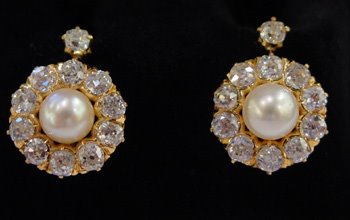
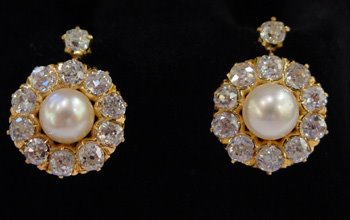
She was standing at the dressing-table mirror massaging the lobes of her ears before loading them with moody de Lascanbanes pearls encrusted with minor de Lascabanes diamonds. The earrings made her suffer regularly, but it was all in the game ...'
I feel sufficiently inspired by this to join in her Take Back the White movement and start a Patrick White Corner here, a small regular space for the old curmudgeon's own unique voice. Here, then, is the reading for today, from the source of the original hoax, The Eye of the Storm. I don't quite know why I remember this bit so clearly, but my guess is that most women, at least -- and I mean women of any age, in any time -- will shiver at it just a little.
'After receiving her mother's cheque Dorothy had considered splurging some of it on an important dress: an armature to intimidate any possible adversary, and to warn off what could be worse, an importunate admirer. But on sending for a statement almost immediately after paying the money into the bank, she thought she could not bring herself to reduce such a lovely round sum; she would make do with her trusty Patou black, enlivened with a jewel or two ...
On the night, then, it was the Patou black, of such an urbane simplicity it had often ended by scaring the scornful into a bewildered reassessment of their own canons of taste. And the diamonds; everyone must bow to those: their fire too unequivocally real, their setting a collusion between class and aesthetics. These were some of the jewels the colonial girl had been clever enough to prise out of her husband's family by knowing too much. If they had been more than a paltry fraction of the realisable de Lascabanes assets, and if she had not detested all forms of thuggery, Dorothy Hunter might have seen herself as a kind of female Ned Kelly.
She was standing at the dressing-table mirror massaging the lobes of her ears before loading them with moody de Lascanbanes pearls encrusted with minor de Lascabanes diamonds. The earrings made her suffer regularly, but it was all in the game ...'
Subscribe to:
Posts (Atom)
