Saturday, July 15, 2006

CHAPTER THREE ... in which St Patrick buys the How-To book


Where to begin an analysis, a commentary, or even just an incredulous expostulation in response to this?

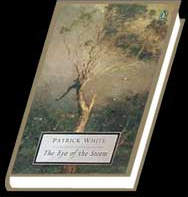
For those who haven't already read the original paper article or the cut-down online version, here's the cartoon version: in imitation of a similar British hoax involving V.S. Naipaul, someone from The Australian -- possibly Jennifer Sexton, author of the article, who does not say who set this sting up -- sent Chapter 3 of Patrick White's The Eye of the Storm to twelve Australian publishers and agents, changing the names of the characters, re-titling the novel The Eye of the Cyclone (oh, dear; surely they could have been a bit witty about it, at least) and submitting the MS under a name manifestly not a real one, but an anagram of PATRICK WHITE.

('Wraith Picket', forsooth; why didn't they just call him Keith Crapwit and be done with it?)

Two publishers/agents have not yet replied, after three months, and the other ten all turned it down. Some suggested that St Patrick should read David Lodge's How-To book, and others that he should join a writers' centre. (He would have abominated how-to books and writers' centres.)

The chapter in question was one of the least typical bits, and I'm sorry to say probably one of the least successful bits, of White's writing that I can think of, short of his first two novels Happy Valley and The Living and the Dead, in which he was merely clearing his throat.

The offending chapter is smack in the middle of the action, jumps around chronologically, and, most atypically for White, is pretty much all narrated in free indirect discourse, reflecting the thought processes of the deeply awful character and the kind of language he would use.

I can't work out which is the worst:

(a) the bad faith of the entrapment, the smugness of its aftermath, and the shabby (and incoherent, as Jeff Sparrow points out in this excellent piece) reactionary agenda behind the exercise,

(b) the failure of the agents and publishers' readers who rejected the chapter to recognise either the actual novel or, at the very least, White's unique, highly spottable style, and the incontrovertible evidence it provides that people getting jobs in Australian publishing houses have clearly not seen fit to make it their business to read a little Australian writing, or

(c) the unambiguously, unashamedly and exclusively commercial agenda behind some of the rejections.

I could just cry. And I would, if this episode were not, in its own toxic way, so funny. Not one person or organisation comes out of this particularly well, except perhaps Michael Heyward from Text (no surprises there; Heyward has been one of the class acts of Australian publishing for twenty years), who expressed concern that it had happened and the opinion that publishers needed to be kept on their toes -- unlike everyone else quoted, who toughed it out so brazenly they would have made Pats and Eddie proud.

And maybe Patrick White himself, of course. And he, poor old poppet, is past caring. Or so one hopes.

UPDATE: More at Larvatus Prodeo.

Saturday, July 08, 2006

In memory of Lisa Bellear, 'not one for the easy road'

Aboriginal poet, photographer, activist, scholar and all-round comedian Lisa Bellear died in her sleep at home last week, of as-yet-unknown causes.

Lisa was a Goernpil/Noonuccal woman from Stradbroke Island in Queensland, living and working in Melbourne. She was 45.

She was one of the funniest people I've ever met. She was a wonderful advocate for Aboriginal causes. She was outspoken, energetic, brave, and a joy to be around.

Here's a poem of Lisa's that I've borrowed from scepticlawyer's blog.


Hanover Street Brunswick 3056
(On a bright sunny afternoon)

Cruisin' - on my way with a keen
sense of purpose: milk (full cream),
toasting bread, cigarettes, papers
...a woman's day

Sensor rays connect with a thirty
centimetre 'white' child who sits
joyously on a three-wheeled
plastic bike

I feel safe enough to share
my smile

As we check each other over
with carefree knowing smiles -
his parents raise their heads
through the pruned rose bush

In twenty years time will
he remember this warrior woman?
I wonder


For more on Lisa, in an Age article from two years ago, go here.

Thursday, July 06, 2006

John Kinsella and the Parliament of the Birds

I've just sent off a review piece on John Kinsella's last two books, The New Arcadia and America, to the Australian. Still thinking hard about the first one, which is an elaborate, focused, politicised portrait of Kinsella's home landscapes in the WA wheat belt.

One thing that struck and kept striking me about this book-length and formally elaborate, playful, engaged and enraged poem is the way it speaks to Les Murray's work without any sense of competitiveness, imitation or regrettable boyo muscling-up. I have no idea what relations are like between Kinsella and Murray but despite their political differences (not as huge, if their work is anything to go by, as some imagine, and certainly neither of them toes anybody else's party line) I bet they understand each other's work very well.

The New Arcadia is divided into five 'acts' each of which begins with a 'drive'. It's the same drive five times, at different times on different days in different moods: a meditation on being in and moving through a landscape. One of my favourite things about it is the birds. Kensella is armpit-deep in eco-politics and that's one of the bases of his vision here.

Where I'm living, in an old suburb of Adelaide that's fairly near the sea, one of the joys of the last eight and a half years has been the daily communing with assorted birds: blackbirds, rainbow lorikeets, musk lorikeets, sparrows, honey-eaters, pigeons, willy wagtails, magpies and crows are birds I see at least one of every day. Sometimes I wake to the crooning and burbling of next door's chooks; some days I see a seagull; and occasionally, bizarrely, I happen to look up and see a pelican ponderously riding some sky current or other, like an angel in a painting. But Kinsella's avian landscape puts this modest suburban flock to shame, and I like this poem and its ideological underpinnings so much, here's a tribute to him and his birds: a list of every feathered creature in the poem, and some of their best moments.


MAGPIE
KOOKABURRA
GALAH
CROW
EMU
CORELLA
FINCH
BLACK-FACED CUCKOO-SHRIKE
WAGTAIL

*****

In the corner paddock, four species of birds
congregate -- if not interacting
then scanning spaces between others'
courses: insect-hunting heron

knifing random lines between scattered
pink and grey galahs, magpie larks
stressing laws of genre, place, and limits,
and the crow watching acutely:

*****

RED-CAPPED ROBIN
LITTLE CORELLA

*****

... there was a species
of bird high in the salmon gum
that no longer exists,

*****

MULGA PARROT
TWENTY-EIGHT PARROT
WHITE COCKATOO
WHITE-FACED HERON
RUFOUS SONGLARK
SILVER-EYE
SWALLOW
EAGLE
BOOBOOK OWL
CHICKEN
ELEGANT PARROT
SKYLARK
CRESTED BELLBIRD
THORNBILL
HAWK
PURPLE-CROWNED LORIKEET
OWL
TAWNY FROGMOUTH
WHITE-TAILED BLACK COCKATOO
BLACK-SHOULDERED KITE
WEDGE-TAILED EAGLE
COCKATIEL
TURKEY
NIGHTJAR

*****

Three white-faced herons arrive this morning,
the extinct volcano weathered down to the emollient
of mist and oil of eucalypt, spiralling
on to the limbs of their roosting tree, body fed
on soakage and samphire, their deep-throated croak
the result of scandal or espionage, swaying
as the dregs of the front stir the mist and gently
whip the leaves, but never at risk
of unseating.

*****

YELLOW ROBIN
WOOD SWALLOW
GOLDEN WHISTLER

*******************

But now I will you tell a wondrous thing:
As long as I lay in that swooning,
Me thought I wist what the birds meant,
And what they said, and what was their intent
And of their speech I hadde good knowing.

Sunday, June 18, 2006

The voice of the past: God and grammar

A few years ago, David Marr gave a public lecture, 'The Role of the Writer in John Howard's Australia', expressing his earnest wish that more Australian novelists would write fiction about the conditions and the values of contemporary Australian life; that they would engage more directly with its daily texture and its political questions, and the way that the latter shape the former.

Where, he more or less asked, was the Australian Coetzee or McEwan? (Of course Coetzee is the Australian Coetzee now, but I don't think Elizabeth Costello and Slow Man were quite what Marr had in mind either.)

In the last decade or so there have been several good novels of the kind Marr meant: Amanda Lohrey's Camille's Bread and Elliot Perlman's Three Dollars are the first that come to mind. Such historical novels as Moorhouse's Grand Days and Kate Grenville's The Secret River are also profoundly political, but I think Marr meant something more specific, something more like the direct critique that realism can deliver: something with a narrower gap, if you like, between the metonymic and the mimetic.

The discussions about art and politics and propaganda have been had to death, in great detail and at high levels of complexity, and people are never going to agree about them. But having read first The Secret River and then James Bradley's The Resurrectionist over the last half-year or so (and before I go on, both books are recommended; this is a quibble. A biggish one, but no more), I've been thinking about a more specific question raised by the writing of historical fiction.

Isabel Wyly was penniless orphan when she emigrated alone, at 18, from Dublin to Adelaide in 1851. Writing to her sister-in-law Matilda back in Dublin on July 2, 1856, she began her final paragraph like this (all errors are sic):

'Bein limited to time, as the Mail starts tomorrow, I must bring thiss cribble to a conclution, leeving you and your deer little ones to the care of Him who will never forsake, tho all friends may. He will never if we do not forsake Him, and if it should Please Him that we should not meet agen in this World may we all meet in the next where all truble shall be at an end ...'

That is the authentic voice of the mid-nineteenth century. You can hear it in endless diaries and letters. Isabel may not be able to spell 'dear', but she knows it's 'care of Him who will never forsake', not 'care of He who will never forsake'; and she believes utterly in God as the moral, spiritual, even emotional centre of the world in which she finds herself.

How then is a contemporary novelist, unarmed either with Christian faith as a matter of course or with a thorough grounding in grammar at an early age, ever properly to replicate an individual voice from the past?

Kate Grenville wisely avoids first-person narration; her story is mainly channelled through the POV of her hero, and 'free indirect discourse' -- third-person narration, but seen through his 'thoughts' -- is her chosen narrative mode. She uses phrasing that delicately suggests and echoes, without attempting to ventriloquise, the speech patterns of the period.

James Bradley takes on the far more difficult task of creating period speech and thought patterns in the first-person narration of his protagonist Gabriel Swift. This book has some very good things about it, and the school-of-anatomy and grave-robbing stuff is absolutely gripping, but the narrative voice is an inexact, over-insistent pastiche of 'the past' in its rhythms and usages, and Bradley lost my readerly suspended disbelief with Gabriel's very first ungrammatical pronoun. No young man in London in 1826 who was sufficiently well-educated to speak in Gabriel's mannered and articulate voice would have said 'a habit which will often bring Robert and I to tears of hilarity', or 'knowing it was her of whom we spoke'.

Bradley dismisses the question of religion very early on when the master anatomist dismisses it as 'superstition' and claims 'We are men of science'. God barely rates a mention from then on. It might be a neat bit of authorial problem-solving but it would never, ever have happened. Unbelievers there were many and their numbers rose as the century wore on, but faith and the loss of it were always an issue to be taken seriously; you simply cannot extricate your subjectivity from your times (which is the one thing that made me uneasy about Gail Jones's 19th century heroine in Sixty Lights and the ease with which she negotiates illicit pregnancy and single motherhood).

I'm not sure whether Grenville's hero concerns himself with God at any point either, but I don't remember any instance of it except perhaps briefly in passing, and a remark about the way God seems, to a small ragged London boy, 'foreign as a fish'.

Yet Christianity was the linchpin of (western) people's lives pre-20th century in a way it's almost impossible to imagine now. Religion trumps romantic love at the turning point of Jane Eyre, itself written at the hinge of the 19th century and again in first-person narration: the moment when Jane, having discovered that Rochester is married to the mad Bertha, resolves to resist becoming his mistress and to tear herself away from him and from Thornfield:

'I will keep the law given by God; sanctioned by man ... Laws and principles are not for the times when there is no temptation: they are for such moments as this, when body and soul rise in mutiny against their rigour; stringent are they; inviolate they shall be.'

Melbourne historian Greg Dening, reviewing Roger McDonald's Mr Darwin's Shooter on the radio a few years ago while I was struggling myself with ludicrous efforts to write good fiction about 19th century characters, said something I've never forgotten about the difficulties of attempting any kind of historical accuracy. Authenticity is, by definition, unrecoverable: the past really is another country and they really do do things differently there, and some things about it and them are forever made strange and mysterious by distance. 'The past,' said Dening, 'is more than just us dressed up in funny clothes and speaking funny speak.'


Cross-posted at Sarsaparilla.
Friday, June 16, 2006

Requesting the pleasure

I got my invitation in the mail the other day to the Miles Franklin Award presentation dinner thingy. When I say 'invitation' what I mean is that I was being invited to pay them $90. This is actually not a ripoff as the one I went to in 2004 was a truly excellent affair in the way of food, wine and guest speaker: Cate Blanchett on Australian women artists, and I'm here to tell you the woman has a lovely brain as well as looking like, well, that -- lit up from inside by some magical, milk-white candle -- and she made a really excellent speech before going home early to breast-feed. Watching her deep in conversation with David Marr was quite an experience.

If I were in Sydney or if the dinner were being held here I would probably stump up and trot along, as prize nights always provide an excellent anthropological study. Watching the behaviour of shortlisted writers -- and their partners; sometimes especially their partners -- is cruel but highly entertaining. It's not the 90 bucks I mind so much as the plane fare halfway across the country.

And if I were a betting woman I'd be in a bit of a state; Kate Grenville has to be the favourite, but without going too much into who thinks what about whom, I can picture some strong resistance from at least one of the judges. To my shame I've not yet read all the shortlisted books so can't give a personal favourite, but if Grenville doesn't get it then it could be Brian Castro's year.

Thursday, June 01, 2006

More on writing

Over at the new Australian lit/culture/media blog Sarsaparilla, where Laura from Sills Bend has gathered together a team of us to blog the night away about all things antipodean or loosely related thereto, Wendy James has just posted a lovely quotation from Nabokov about the relationship between writer and reader. The post is headed 'Writers on Writing', which immediately reminded me of my own all-time favourite such book, The Eye of the Story by that incomparable chronicler of the American South, Eudora Welty.

I wrote my PhD thesis, back in the mists of time, on the representation of place in Australian fiction, so Welty's classic essay 'Place in Fiction' (1956), which appears in this book, was already familiar to me. But in it I found an image I had forgotten, and which I still think, even after all that has been said by critics and theorists over the last fifty years about fiction and representation and writing, is one of the best and most useful things about writing fiction that I have ever seen or heard anyone say:

'Some of us grew up with the china night-light, the little lamp whose lighting showed its secret and with that spread enchantment. The outside is painted with a scene, which is one thing; then, when the lamp is lighted, through the porcelain sides a new picture comes out through the old, and they are seen as one. A lamp I knew of was a view of London till it was lit; but then it was the Great Fire of London, and you could go beautifully to sleep by it. The lamp alight is the combination of internal and external, glowing at the imagination as one; and so is the good novel. Seeing that these inner and outer surfaces do lie so close together and so implicit in each other, the wonder is that human life so often separates them, or appears to, and it takes a good novel to put them back together.

The good novel should be steadily alight, revealing. ... The moment the place in which the novel happens is accepted as true, through it will begin to glow, in a kind of recognizable glory, the feeling and thought that inhabited the novel in the author's head and animated the whole of his work.'

Friday, May 26, 2006

But will it make me a Better Person?

When I was an undergraduate, those who were teaching me literature and imparting their conviction (as was fashionable at the time) that literature made one a better person were not leading by example. We were being exposed to the beautiful thoughts and carefully teased-out, finely-spun observations of Virginia Woolf and E. M. Forster and Katherine Mansfield, of Chekhov and Tolstoy and George Eliot, and it was supposed that we would absorb by a process of osmosis their finely wrought moral sensibilities.

Two things immediately became clear: (1) that the departmental Woolf-worshippers, Forster-favourers and Tolstoy touts imparting these views included among their number several people who habitually indulged in some of the pettiest, shabbiest behaviour I have ever seen before or since, and (2) that Virginia Woolf, God love her and her genius, was a Grade-A bitch, and Katherine Mansfield made her look like a beginner. I didn't mind their bitchery at all, not least because it was of the finest, but I wasn't under any illusions about either of them, or about the morally elevating effect that their work was allegedly going to have on me.

It was only years later when I came to read around in theories of narratology that I understood all this a little better. The notion of the 'implied author' is a useful one: it's what might be called the writer's best self, her wisest, her most adult, her most knowing and self-knowing self. In fiction or poetry the 'person who is speaking' just is not the same as that flawed being who ignores the dishes, fobs off her editors and creditors, loses patience with her elderly father, and swears at the person ringing from the call centre in Mumbai. None of this stuff makes its way to the pristine page: the implied author is a construct, a sort of distillation of all the best (and only the best) stuff that the writer has to say.

So it was a bit odd to be driving down Grand Junction Road on a Friday morning listening on the radio to the writer Aleksandar Hemon talking to Ramona Koval from the Sydney Writers' Festival about whether literature in particular and art in general were morally uplifting, for I've never been able to see how it could be or why it should be asked to carry so unreal and unreasonable a burden. No matter how many languages are spoken or instruments played, no matter how many books are read or operas attended, people will find a way of rationalising, and then doing, whatever it is that they want to do. They will find a way, as Hemon pointed out, to send you to Auschwitz or Birkenau even while they listen to Beethoven's Ode to Joy.

Literature can't make you a better person. But one thing it can do, if you ask it to, is get you through life's worst moments in slightly better shape than you might otherwise have managed -- either by giving you words to express the horror, or giving you consoling or diverting images, as on the pre-dawn drive I took some years ago to the hospital where my mother had just died, when a huge golden harvest moon hung on the horizon and lit the road for me all the way; there was time to dredge up at least twenty unforgettable literary moons, from the portent of a deadly storm in 'The Ballad of Sir Patrick Spens' to Jane Eyre's mystical communion with her own dead mother, via the stern imparted wisdom of the moon through her bedroom window, to the darkness and mystery of the moonlit Sydney Harbour where Joe Lynch lies drowned in Five Bells: 'Deep and dissolving verticals of light / Ferry the falls of moonshine down.'

Hilary McPhee, talking about literature at a writers' festival some time in the 1980's, said 'We read books in order to find ideas about ways to live our lives', and this seems to me to be a more modest, a more accurate and a more realistic claim. I have learned over decades from books and poems how better to deal with family conflict, with hard decisions, with love gone bad, with anger, despair and death. Reading literature hasn't made me a better person, but it has made me much readier for anything, good or bad, than I would ever otherwise have been.

Monday, May 22, 2006

Dulcet But Creepy

I've just been watching DBC Pierre on Denton. (I'm not sure DBCP qualifies as 'Australian literature', actually. Denton, as the son of novelist Kit Denton and himself a prolific writer if not strictly of 'literature', is probably a more legitimate topic for this purist blog.)

DBCP has an extraordinarily beautiful voice. He also has some gripping tales to tell -- tales of exotic places, larger-than-life characters, extreme experiences and shady deals. That is, he is formidably equipped as a fiction writer.

But I found his performance deeply disturbing and weird. If the cats brought him inside, I think I would put him back out in the garden.

Thursday, April 27, 2006

Miles Franklin update

The shortlist as just announced is exactly the same as the one I hypothesised below, earlier today.

Nobody's gonna believe I didn't know. But as one of the judges who bailed a couple of years ago under interesting circumstances, I'm one of the last people likely to have been in the loop.

The three big names were predictable enough. There's a huge buzz around Carrie Tiffany because of her recent nomination for the Orange Prize, and Brenda Walker's work has been consistently excellent (and consistently undervalued) since she first began publishing fiction.

But I'm still a bit startled.

Miles Franklin shortlist due today

Here at high noon precisely, I can't find any online sign so far that the Miles Franklin shortlist has been announced yet, but it's expected before the end of the day. The length of the shortlist varies from year to year, but for what it's worth here's my prediction of what will survive from the longlist (see March 19 post) onto the shortlist. NB these are not necessarily personal favourites, just the things I think will make it:

Brian Castro, The Garden Book
Kate Grenville, The Secret River
Roger McDonald, The Ballad of Desmond Kale
Carrie Tiffany, Everyman's Rules for Scientific Living
Brenda Walker, The Wing of Night